Original Rider Waite Tarot Deck Review
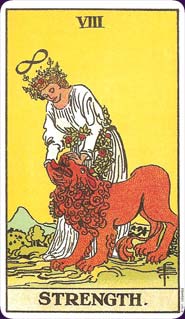
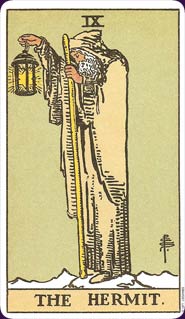
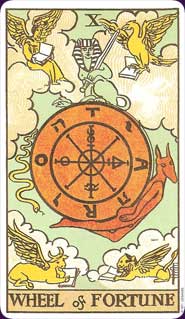
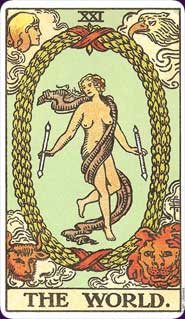
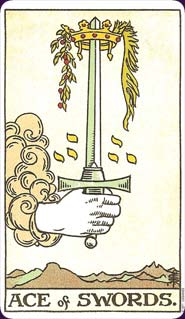
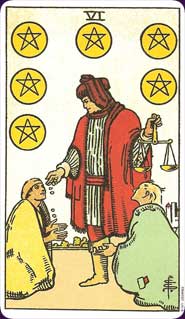
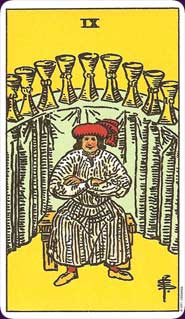
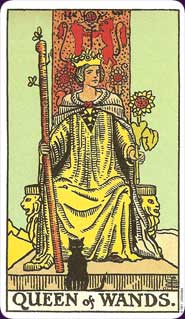
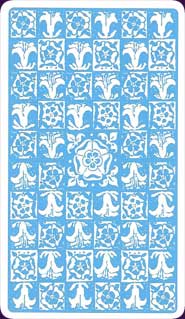
The Original Rider-Waite Tarot differs from the Rider-Waite Tarot, as it has less saturated colours and a brownish hue, titles as drawn by Pamela Colman-Smith, and a more decorative back pattern.
Buy yours from Amazon.com now
Deck Type: Tarot Deck Cards: 78
Creators: A. E. Waite, Pamela Colman-Smith
Publisher: US Games Systems 1999
Retailers For Original Rider Waite Tarot
See Price at Amazon.comSee Price at Amazon.co.uk
See Price at Amazon.ca
Get A Free 101 Tarot Questions Book Now & Tap Into The True Power of Your Tarot Cards
Enter Your Email Below & Get 101 Tarot Questions FREE!
Original Rider Waite Tarot Review by Christopher Butler
One of the first decks I owned was the standard Rider Waite, published by U.S. Games/AGM Muller. Indeed, this is the deck that everyone is familiar with. As you learn more about the tarot, you quickly begin to discover that the Rider Waite has been ‘cloned’ on countless occasions, the black and white drawings being clothed by many artists in sometimes tasteful, often outrageous colours.
Most people would be very surprised to learn that the US Games edition is also a ‘clone’ and not the original. The print plates for the Rider Waite were destroyed during the London Blitz. Rider and Co did not put out another edition until the seventies when they re-packaged what was in effect the US Games edition, manufactured by AGM Muller. When Stuart Kaplan re-published the deck, he took the black and white line drawings and had them recoloured, closely following Waite’s personal copy as reference. Waite’s daughter Sybil gave her permission, hence this deck’s ‘authorised’ status.
Although the US Games Rider Waite deck is itself a ‘clone’ it remains the most accurate reproduction available of this deck in what would have been its original colour livery. More recently Rider and Co, in conjunction with U.S. Games have published a full photo facsimile entitled ‘The Original Rider Waite’ and I would encourage anyone to add it to their collection. I found this edition disconcerting when I first viewed it The colour are not as you remember them from the US Games edition and there seem to be differences in the drawings themselves. Look at the face on the Sun -- clearly different from the established version. The text on the Page of Cups appears central, whereas on the original US Games edition (not the later ones with typeface fonts) the calligraphy was famously off centre. As to the colours they seem richer yet duller. Everything grey on the US Games deck is here rich beige. All pale blues have a turquoise green cast. Lemon yellow has become deep gold and vivid reds become a more muted crimson.
Having examined the little white book closely I began to realise that the publisher’s use of the word ‘original’ was rather ambiguous. In most cases any facsimile edition will usually give detailed information regarding the source material. This one does not. What I subsequently discovered is that this is not a reproduction of the first edition. Unlike with modern print techniques, as the plates wore out, the line drawings would have to be re-prepared.
There are further permutations concerning colour. At some stage, presumably during the post First World War depression, Rider seem to have switched to cheaper ink pigments and a less refined printing technique. Remember that this is not full colour printing, as we know it. They used a system called amber paste ups, often prepared by the artist. They are rather like tracing paper overlays and were used to determine the distribution of colours on a black and white line drawings.
So what of the deck then if this is not strictly the original? It remains an indispensable addition to the catalogue and many may even prefer it to its more familiar counterpart. It may not have quite the refinement of the familiar 1971 edition, but it’s very easy to forget that these are early 20th century examples of Arts and Crafts style illustration. With this edition you have that wonderful feeling of seeing the cards in their historical context. The colour is duller but a lot richer. The images are less refined and grainier but the imperfections don’t seem to matter. Many lovers of the Marseille tradition will affirm that a warts and all reproduction of the worn down woodcut is just as rewarding as a pristine modern rendition. Lovers of the Rider will find a similar connection here.
Most importantly, this publication restores the beautiful original back design of Tudor roses and lilies in pale blue, replaced by a non-descript tartan on the U.S. Games edition. Recent U.S. Games editions have also replaced Smith's characterful calligraphy with standard typeface, to bring them in line with the various foreign language editions published. Although this latter innovation looks perfectly smart, many purists (myself included) find this innovation somewhat insensitive to the originals and I certainly prefer the Original Rider Waite for its authenticity in this respect.
To sum up, this edition may not be strictly original in the sense of it being a first edition. It is however a reproduction of a genuine Rider and Co published deck. The US Games version is accurate enough to the first edition (reservations about modern editions excepted) to serve a purpose. By contrast, this new facsimile shows us something of this famous deck’s later print history. Despite its imperfections it is wholly welcome and with regards to my own personal preferences I use this as my standard Rider Waite deck whilst employing the US Games edition in its wonderful ‘giant’ format. In England, this facsimile version is the most widely available and I hope it becomes better known in other territories as well.
Original Rider Waite Tarot Review by Bonnie Cehovet
The Rider-Waite Tarot is one of two predominant Tarot decks in modern times - the other being Aleister Crowley's Thoth Tarot. It is also a deck that I have never felt completely comfortable with (I read professionally with the Morgan-Greer Tarot, which is a Rider-Waite clone, but adapted enough that I feel comfortable with it).
The Original Rider-Waite Tarot is a facsimile of the original deck, in which one of the major adjustments was improved depth of color. (note: The original palates were destroyed during the bombing on London during WW II.)
The cards themselves are 2 3/4" by 4 3/4", of good quality, glossy card stock. The backs show a 1/4" white border surrounding the re-instituted background of white and blue Tudor roses and Lilies. The faces show the same 1/4" white border surrounding a central picture. The Greater Arcana show the card number at the top of the card, with the title across the bottom. The court cards show the suit and title across the bottom of the card. The pips show the card number across the top of the card, with full scenes in each card.
The foreward by Liz Green is certainly a nice addition to the accompanying LWB (although a slightly larger print type would have made me a lot happier!). The symbol of the snake circled with his tail in his mouth that preceedes the forward (and adorns the front cover of the LWB, as well as the cover of the box the book and set arrived in) is a wonderful way to begin the journey into both the LWB and the Rider-Waite deck. In the forward, Liz Greene talks about the images of the Tarot being of an archetypal, rather than a mysterious or "occult" nature. She emphasized that the Tarot talks about the everyday occurences in the life of the Seeker - that the Tarot is a true working tool of empowerment that anyone and everyone has the ability to access. She explains that while the cards of the Rider-Waite Tarot are embedded with the life-long teachings of A. E. Waite, that the wisdom of the Tarot not only predates him, but is larger than Waite or his life. She talks about the Fool's Journey, and generally eases one into Waite's own words on this deck.
Waite begins by talking a little about the symbolism in the Tarot, and about the Tarot offering a key to the mysteries of the spiritual world. He then goes into a quite interesting section on the Trumps Major, or the Greater Arcana. To hear his voice gives one a firm grounding for the work that Tarot does - one of the major reasons, IMHO, that this deck works so well for students new to the Tarot.
Waite presents an interesting section on the history of Tarot, which he ends by saying: "Therefore I must end this subject by repeating that it has no history prior to the fourteenth century, when the first rumours were heard concerning cards. This would be early enough if they were only intended for people to try their luck at gambling, or at seeing the future, if they contain the deep intimations of secret doctrine, then the fourteenth century again is early enough, or at least in this respect we are getting as much as we can." 2
The cards themselves are presented in text version only, with no graphic of the card. From the book:
19. The Sun. Material happiness, fortunate marriage, contentment; Reversed: The same in a lesser sense.
King of Wands: The physical and emotional nature to which this card is attributed is dark, ardent, lithe, animated, impassioned, noble. The King holds up a flowering wand and wears, like his three correspondences in the remaining suits, what is called a cap of maintenance beneath his crown. He connects with the symbol of the lion, which is emblazoned on the back of his throne. Divinitory Meanings: Dark man, friendly, countryman, generally married, honest and conscientious. Reversed: Good but severe; austere, tolerant.
Ace of Cups: The water is beneath and on it are water lilies; the hand comes out of the cloud, holding in its palm the cup, from which four streams are pouring; a dove, bearing in its bill a cross marked host, descends to place the wafer in the cup, the dew of water is falling on all sides. It is an intimationof that which may lie behind the Lesser Arcana. Divinitory Meanings: House of the true heart, joy, content, abode; nourishment, abundance, fertility, holy table, happiness; Reversed: House of the false heart, mutation, instability, revolution. 3
Waite presents what I feel is an important section, and one that often is overlooked: the meaning of multiples of the same card in different suits. i.e. Multipels of Aces, Kings, Pages, Tens etc. The same energy coming from a different elemental aspect can have great impact on a reading, and should not be ignored. It shows the present state of the issue being read for, as well as the key to the "way out".
Waite presents two spreads - the classic ten card Celtic Cross, as well as what Waite calls a Thirty-Five Card Spread, which acts as a followup to the Celtic Cross reading.
The Original Rider Waite Tarot is probably the most basic deck for a student to learn with. From there, the student has a sound grasp of Tarot basics, and can make their own decisions as to how they want to read the cards, and what decks they want to read from. This is also a must have deck for Tarot reference work - and the re-coloring, combined with the original card backs are a lovely added "bonus".
Footnotes:1. ibid. pages 24-26. 2. ibid. page 50. 3. ibid. page 92-93, 108,126.
© Bonnie Cehovet
Complete Details of Original Rider Waite Tarot
Also known as The Original Rider Waite Tarot Pack
Creators: A. E. Waite, Pamela Colman-SmithPublisher: US Games Systems 1999
Deck Type: Tarot Deck
Cards: 78
Major Arcana: 22
Minor Arcana: 56
Deck Tradition: Rider-Waite-Smith
Minor Arcana Style: RWS-Based Scenes
Suits: Cups, Swords, Wands, Pentacles
Court Cards: Page, Knight, Queen, King
The Fool is 0
Strength is 8
Justice is 11
Card Size: 2.75 x 3.75 in. = 6.99cm x 9.53cm
Card Language: English
Card Back: Reversible
Back Design: Alternating blue and white rose and lily grid pattern
Rating: 20/20 or
 stars out of five
Similar Decks to Original Rider Waite Tarot
Theme: Rider-Waite CloneCategory: Available Tarot Decks
Creator: Centenary Special Rider-Waite Tarot, Deck of the Bastard, Giant Rider-Waite Tarot, Glow in the Dark Tarot, Pamela Colman Smith Commemorative Set, Pocket Rider Waite Tarot, Radiant Rider-Waite Tarot in a Tin, Rider-Waite Tarot, Rider-Waite Tarot (1971), Rider-Waite Tarot (University Books), Smith-Waite Centennial Edition Tarot Deck, Smith-Waite Centennial Tarot Deck in a Tin, The Complete Tarot Kit, Universal Waite Tarot by Pamela Colman-Smith Giant Rider-Waite Tarot, Pocket Rider Waite Tarot, Rider-Waite Tarot, Rider-Waite Tarot (1971), Rider-Waite Tarot (University Books), Smith-Waite Centennial Edition Tarot Deck, Smith-Waite Centennial Tarot Deck in a Tin, The Complete Tarot Kit by A. E. Waite

< Previous Deck · Back to Top · Next Deck >
Home > Tarot Reviews > Original Rider Waite Tarot Review